Technical specifications
Dimensions and weights
Overview of the car's dimensions, angles, and weights.
Warning
Do not exceed the gross vehicle weight by overloading the car. Doing so can affect your control of the car, which can result in an accident and lead to death or serious injury.
Dimensions and angles
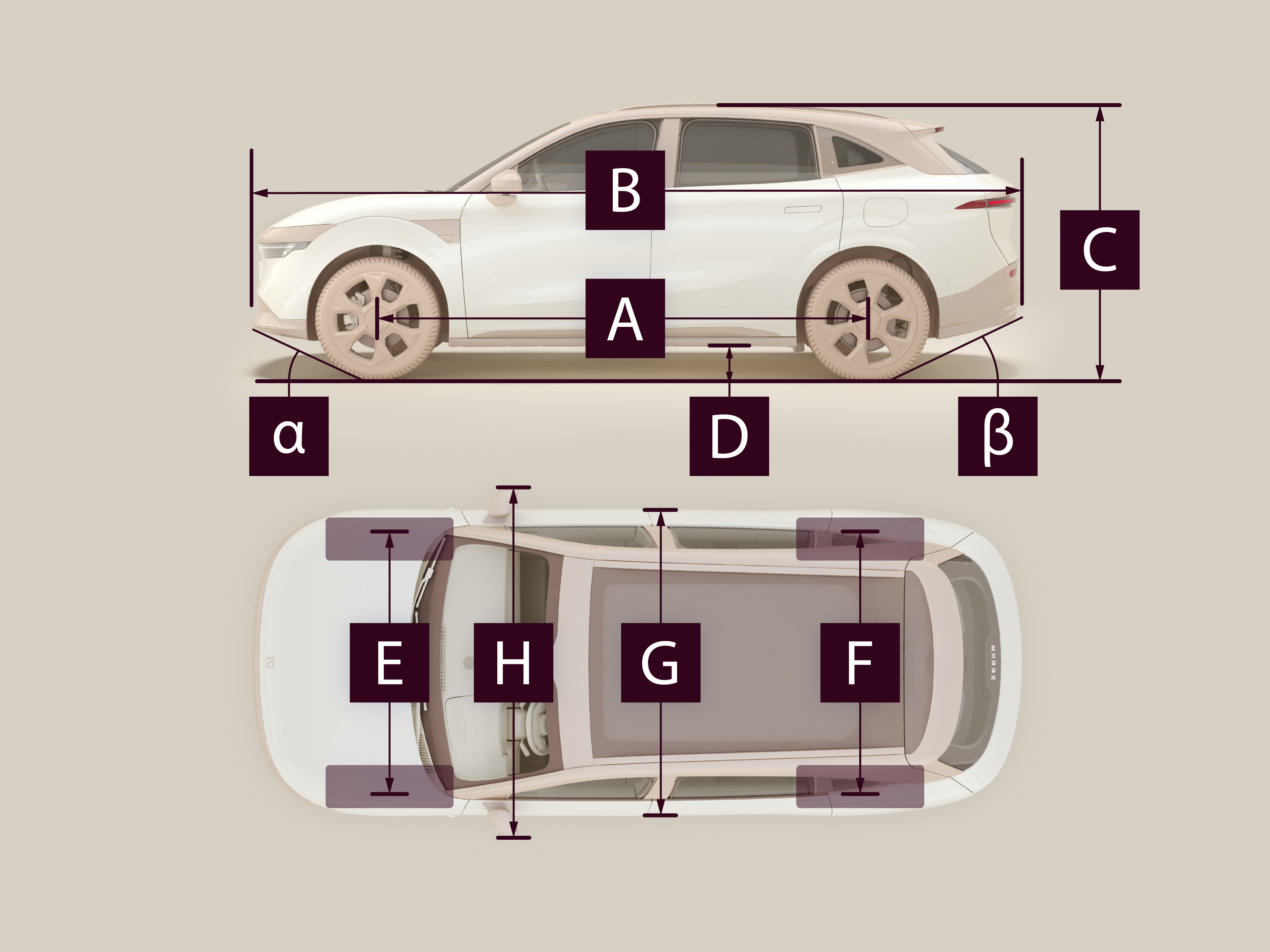

Wheelbase
2900 mm

Length
4787 mm

Height (including multiband antenna)
1650 mm

Ground clearance
172 mm

Wheel track, front
1649 mm

Wheel track, back
1654 mm

Width (excluding mirrors)
1930 mm

Width (including mirrors)
2100 mm

Approach angle
19 degrees

Departure angle
21 degrees
Note
The dimensions and angles listed are based on an unweighted car.
Vehicle weight
| Curb weight (kg) | Gross vehicle weight (kg) | Maximum load capacity (kg) | Maximum braked trailer weight (kg) | Maximum unbraked trailer weight (kg) | Maximum tow ball load (kg) | Maximum roof load (kg) |
|---|---|---|---|---|---|---|
| 2320–2460 | 2840–2990 | 520–540 | 2000 | 750 | 85 | 75 |
Note
Adding any extra options or accessories, such as a tow bar or larger wheel set, to the car increases its weight, reducing the car's maximum load capacity.
The weights listed are the span for all car models and should not be exceeded. The vehicle manufacturer plate, found on the door pillar when opening the right-hand rear door, lists specific weights for your car as follows:
- Gross vehicle weight
- Combination weight (vehicle + trailer)
- Max front axle
- Max rear axle
The gross vehicle weight = curb weight + max load capacity.
The gross vehicle weight is the maximum permissible weight that the components of the car can handle. The curb weight is the mass of the car with 100% filled fluids, no driver, passengers or cargo in the car. The max load capacity is the remaining weight for the driver, passengers and cargo.
Note
Exceeding the gross vehicle weight and/or the max axle weights is not only illegal, but also extremely dangerous.