Safety
Airbags
Airbags are a supplemental safety system designed to deploy automatically and precisely when a collision is detected. The combination of airbags and seat belts offers the best possible protection to the car's occupants in case of a collision.
Airbags overview
- The seat belts and airbags interact. All occupants must wear their seat belt correctly and maintain an upright seating position with their backs against the backrest. Younger children should use an appropriate child safety seat. Failure to do so could result in death or serious injury to the car's occupants.
- Do not install or place items on, or near the airbag panels and their deployment areas. Doing so might reduce the protection provided by the airbags, which could result in death or serious injury to the car's occupants.
- Do not modify, disassemble, or install airbags and related components yourself. Improper installation of the components can cause malfunction and may reduce the protection provided by the airbags, which could result in death or serious injury to the car's occupants. Contact a Zeekr Hi-Tech Service Center or an approved service partner instead.
- Do not drive with deployed airbags. Doing so will affect the car's steering and could cause an accident. If an airbag has been deployed, a trained professional must replace components of the airbag system. Contact a Zeekr Hi-Tech Service Center or an approved service partner for assistance.
- The airbag system's control module is located in the center console. If the center console is drenched with water or other liquid, disconnect the cables to the starter battery. Do not attempt to start the car since the airbags may deploy. Contact a Zeekr Hi-Tech Service Center or an approved service partner for assistance.
- Do not touch the airbag or any interior parts around the airbag compartment after airbag deployment, as they might still be hot or covered with chemicals. Doing so can lead to burns or other injury.
- Avoid extended exposure to smoke and dust released after airbag deployment. Failure to do so can cause skin and eye irritation. In case of irritation, flush your skin and eyes with cold water. If irritation persists, seek medical attention.
The airbag system's control module detects and evaluates the severity of a collision, and then rapidly deploys the appropriate airbags and seat belt pre-tensioners. After deployment, it is normal for smoke and dust to get released into the car.
Airbag deployment depends on the severity of the collision, impact angle, impact force, driving speed, and the type of object that the vehicle has collided with. It is therefore possible that none, or only some of the airbags, are deployed in a collision. Severe structural damage does not determine whether an airbag should have deployed or not.
If there is a fault in the airbag module, the airbag fault symbol  is displayed on the driver display. For more information, see Warning symbols.
 indicator in the driver display has turned on.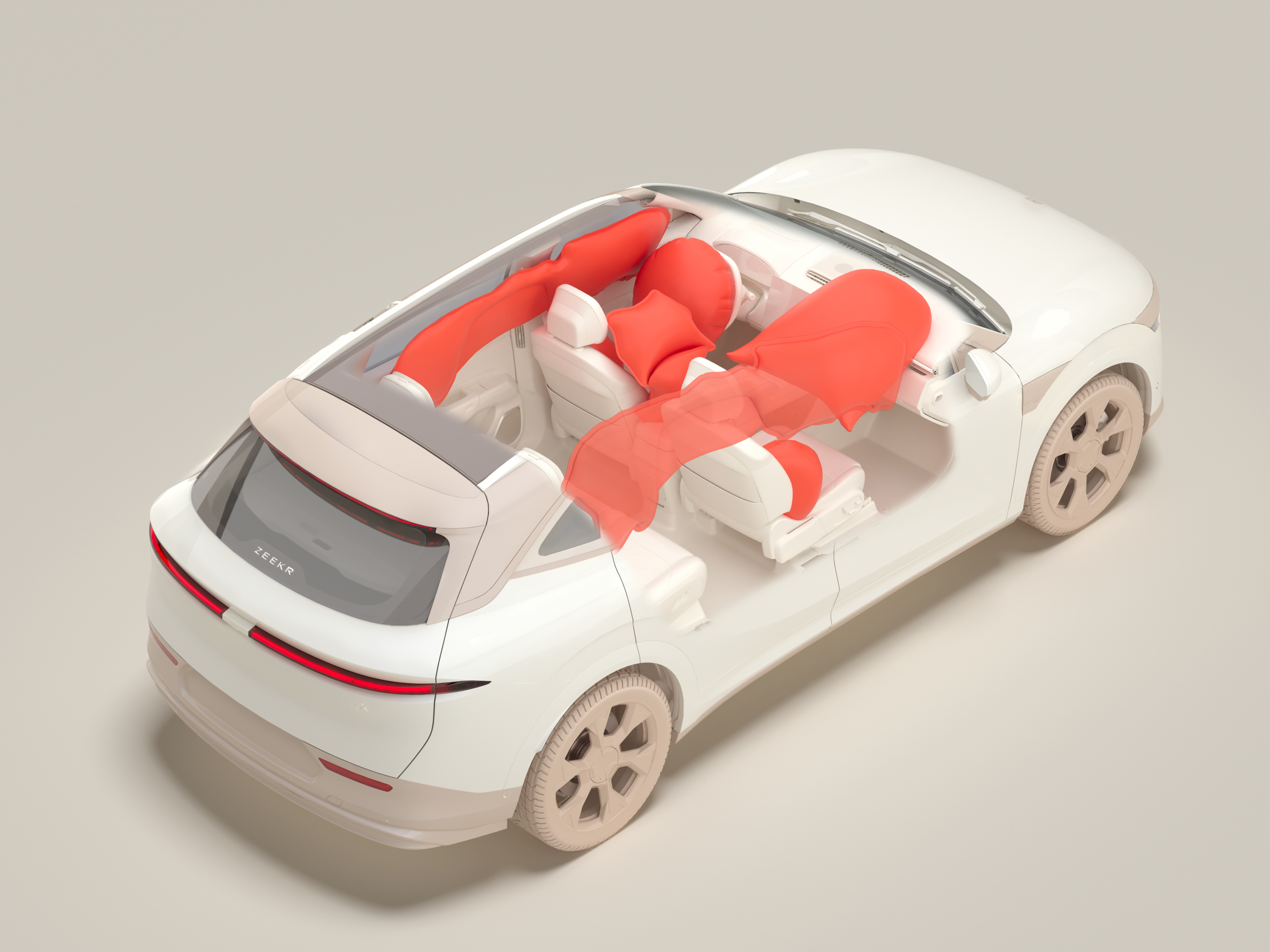
The car is equipped with the following airbags:
- Front airbags
- Front side airbags
- Far side airbag
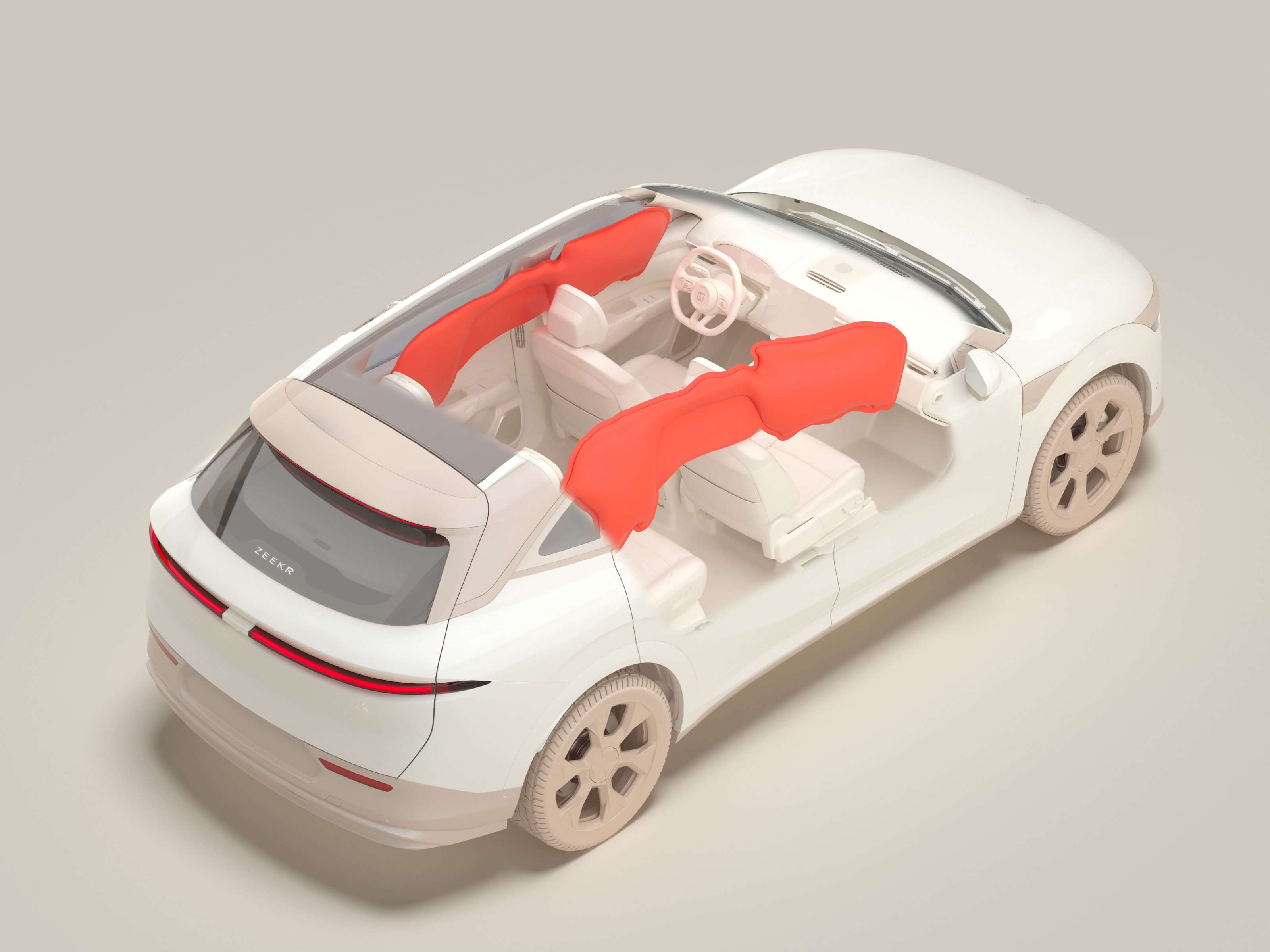
- Inflatable curtains
Front airbags
- NEVER USE A REARWARD FACING CHILD RESTRAINT ON A SEAT PROTECTED BY AN ACTIVE AIRBAG IN FRONT OF IT, DEATH OR SERIOUS INJURY TO THE CHILD CAN OCCUR.
- Front-facing passengers should not sit in the front passenger seat if the passenger airbag is deactivated. Doing so could cause serious injury or death in the event of an accident.
- Do not use seat covers on the front seats. Doing so could inhibit the full and immediate inflation of the airbag, which could cause serious injury or death in the event of an accident.
- Do not allow others to sit or stand in front of the front passenger seat. Doing so could cause serious injury to the passenger seat occupants after airbag deployment.
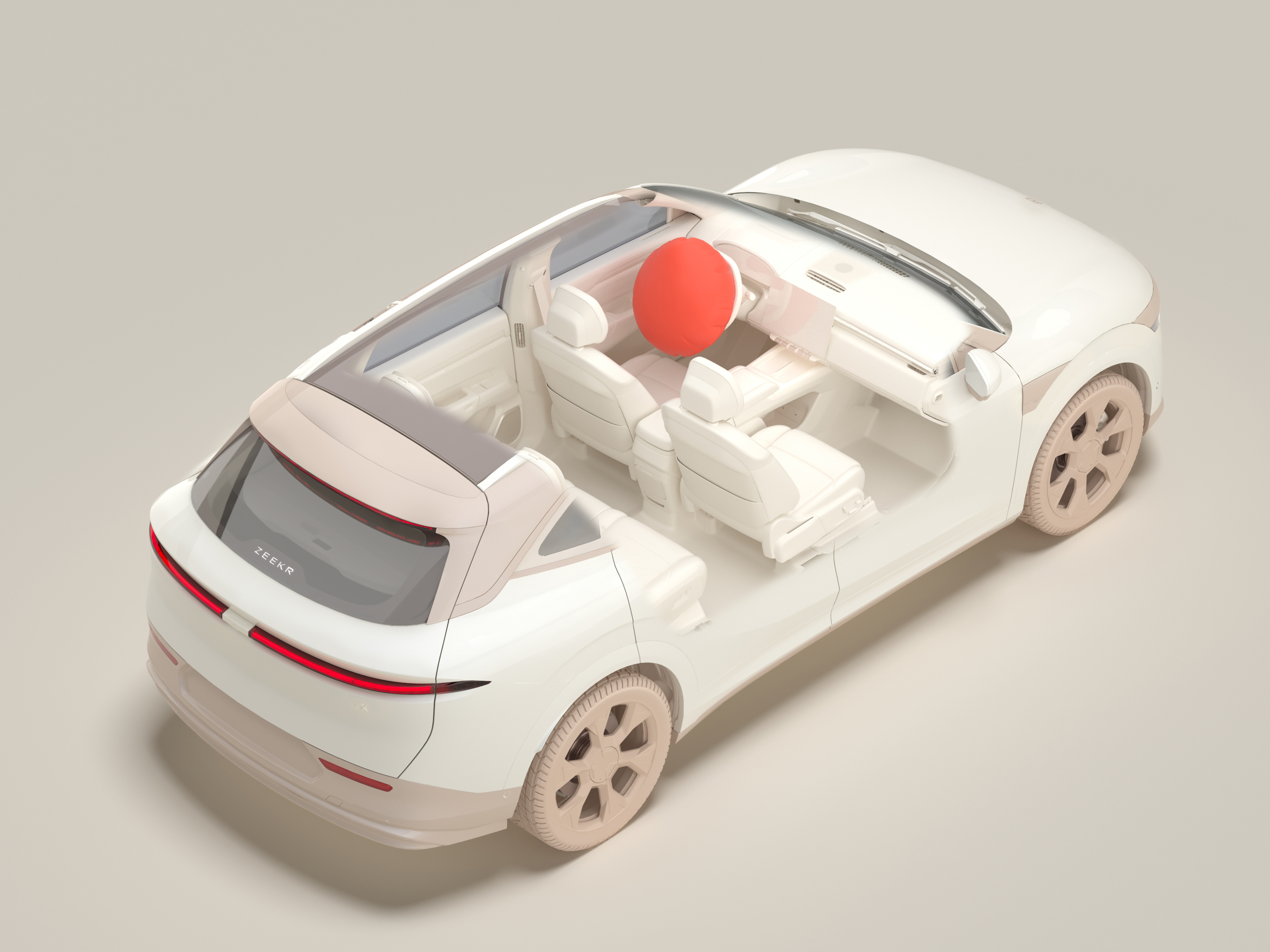
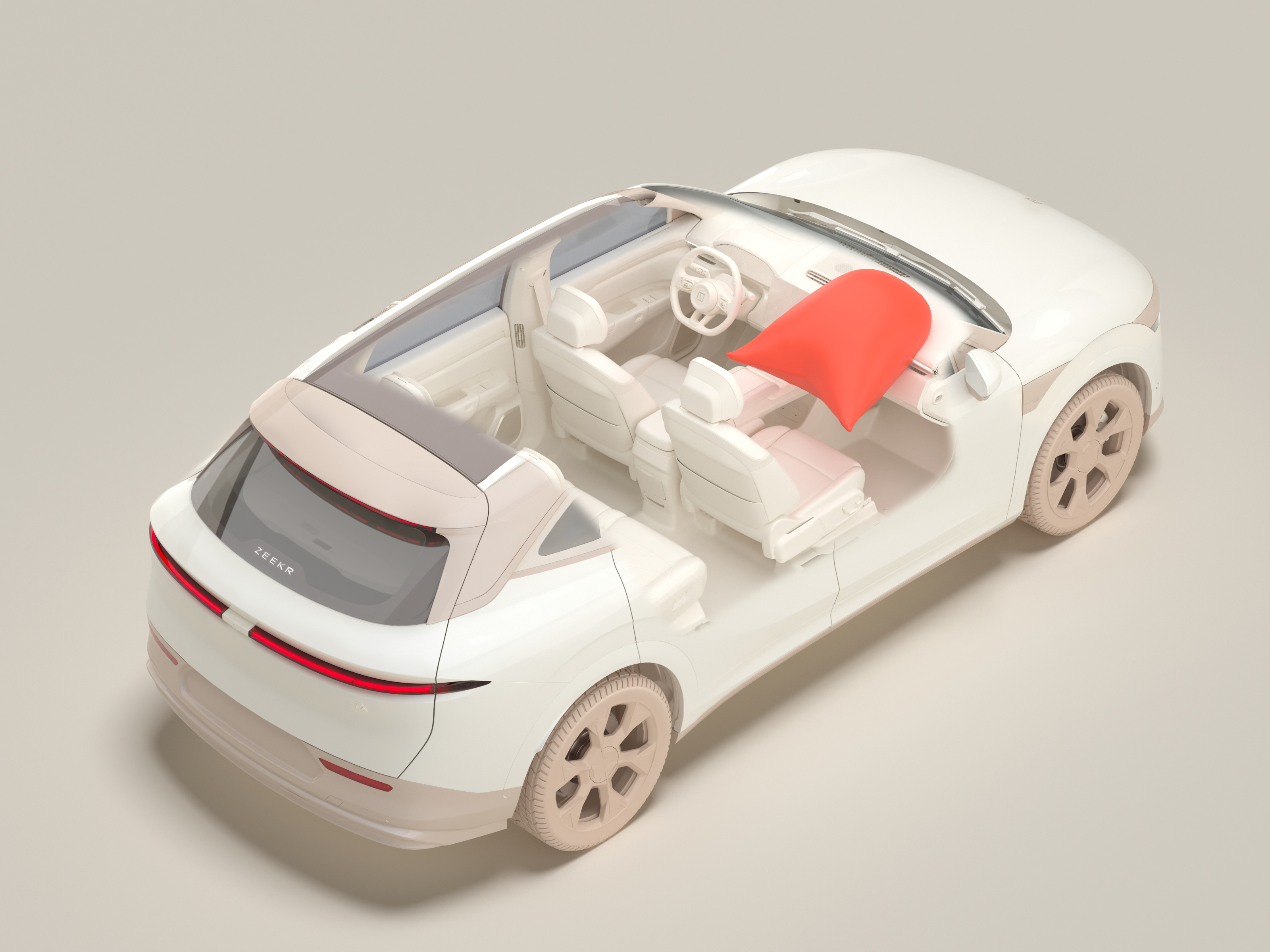
Front airbags are designed to prevent front seat occupants from having their head and upper body strike the car's interior during a collision.
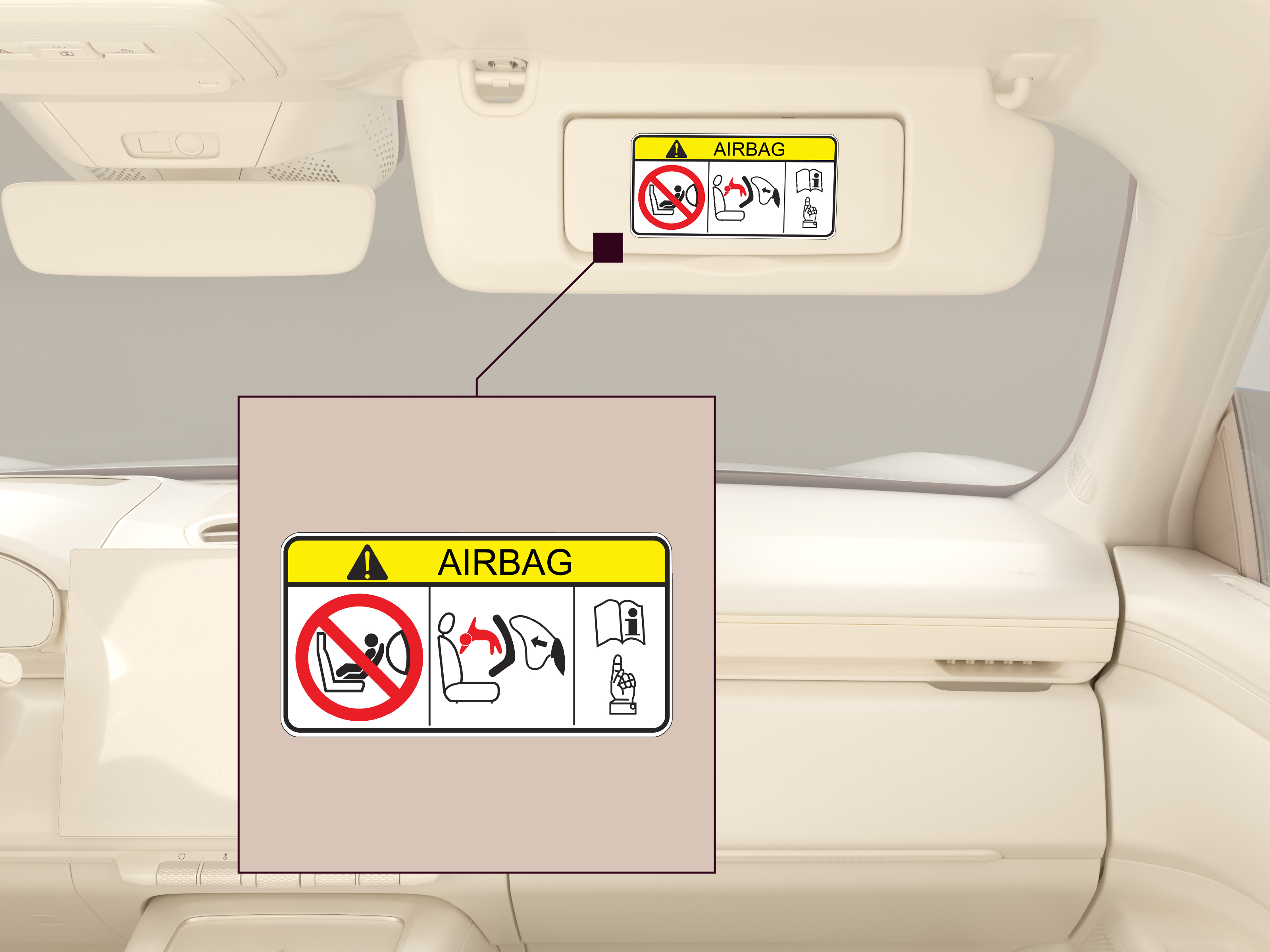
Passenger airbag status indicator
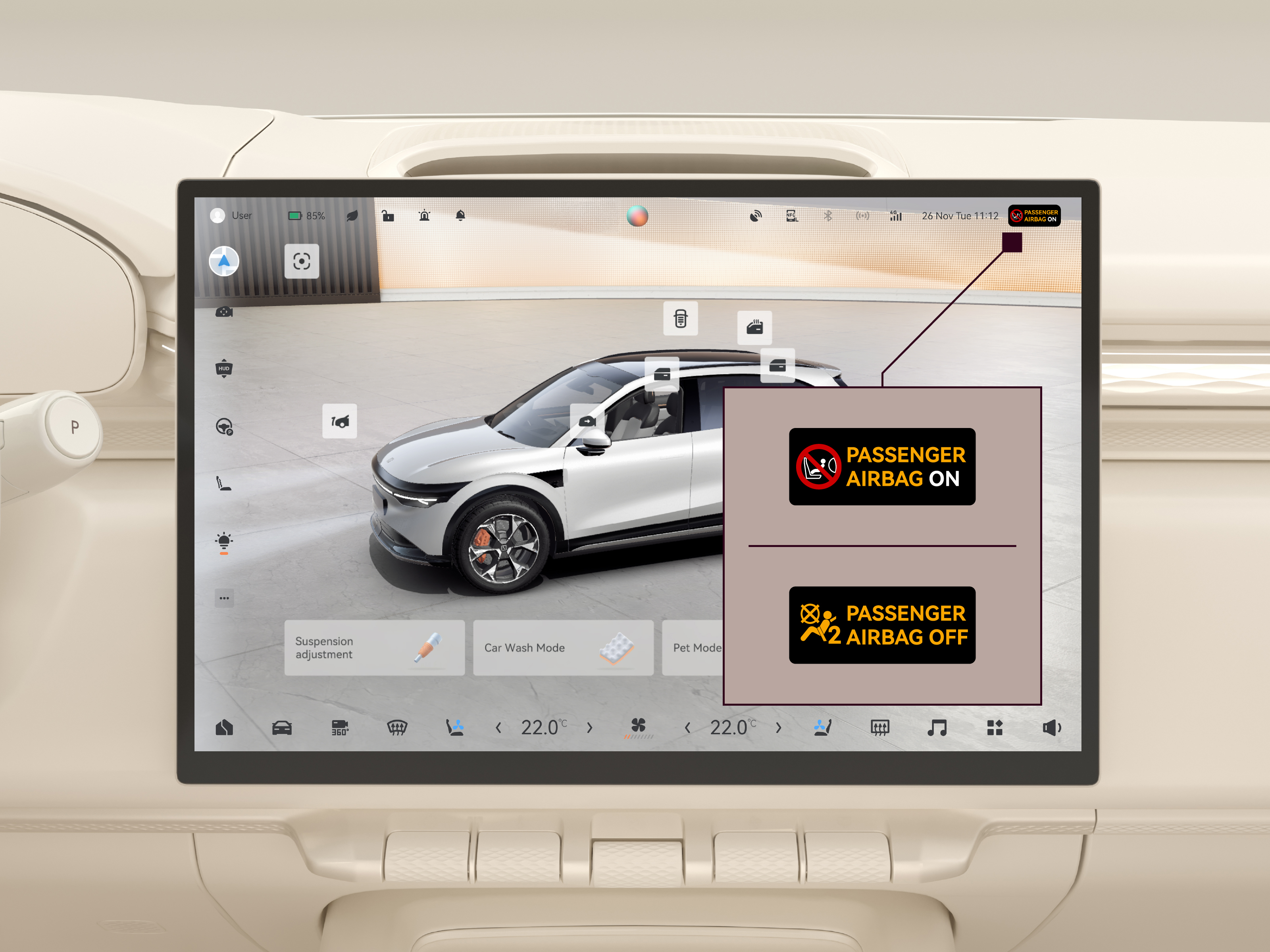
The following symbols located in the top right corner of the center display indicate whether the front passenger airbag is active or not:
- Passenger airbag is off.
- Passenger airbag is on.
When the car is powered on and the gear is shifted to D or R, the status of the passenger airbag is shown on the driver display for a few seconds.
Activate or deactivate the front passenger airbag
in the driver display and the deactivated airbag symbol  in the center display are shown at the same time. There is an airbag malfunction, which could result in death or serious injury. Contact a Zeekr Hi-Tech Service Center or an approved service partner.
The front passenger airbag is deactivated and activated in the center display.
To deactivate the airbag:
- Navigate to
 > Safety & Service > Safety on the center display.
 - In Front passenger airbag, press OFF.
- Press Enable to confirm.
To activate the airbag:
- Navigate to > Safety & Service > Safety on the center display.
- In Front passenger airbag, press
 ON.
ON. - Press Enable to confirm.
A message is shown in the driver display when the front passenger airbag is deactivated and activated.
Front side airbags
The front side airbags are designed to prevent front seat occupants from injuring their chest, shoulders, and hips during a collision.
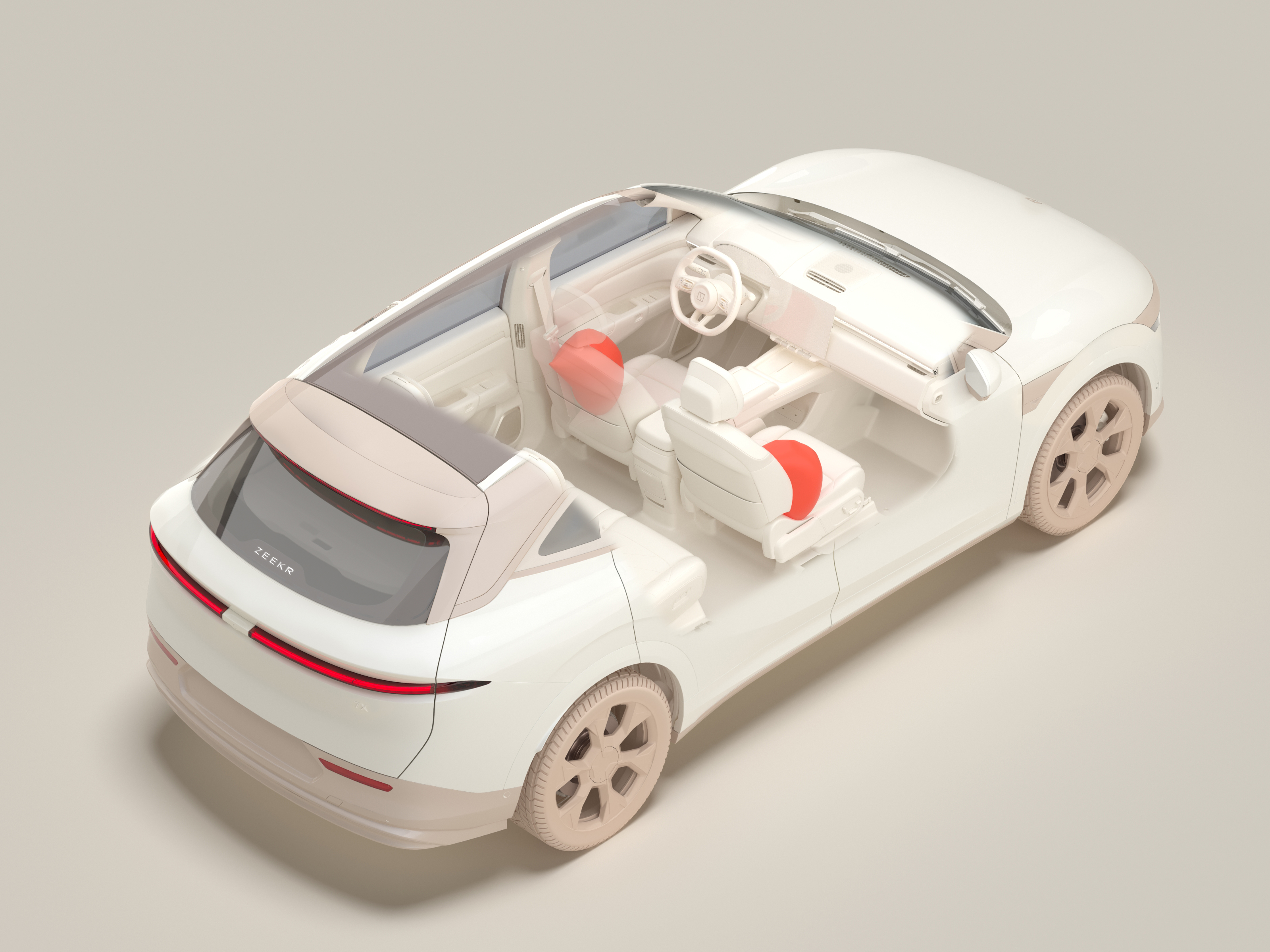
Far side airbag (driver only)
The far side airbag is designed to prevent the driver and the passenger from injuring their head, shoulders, and hips during a side collision.
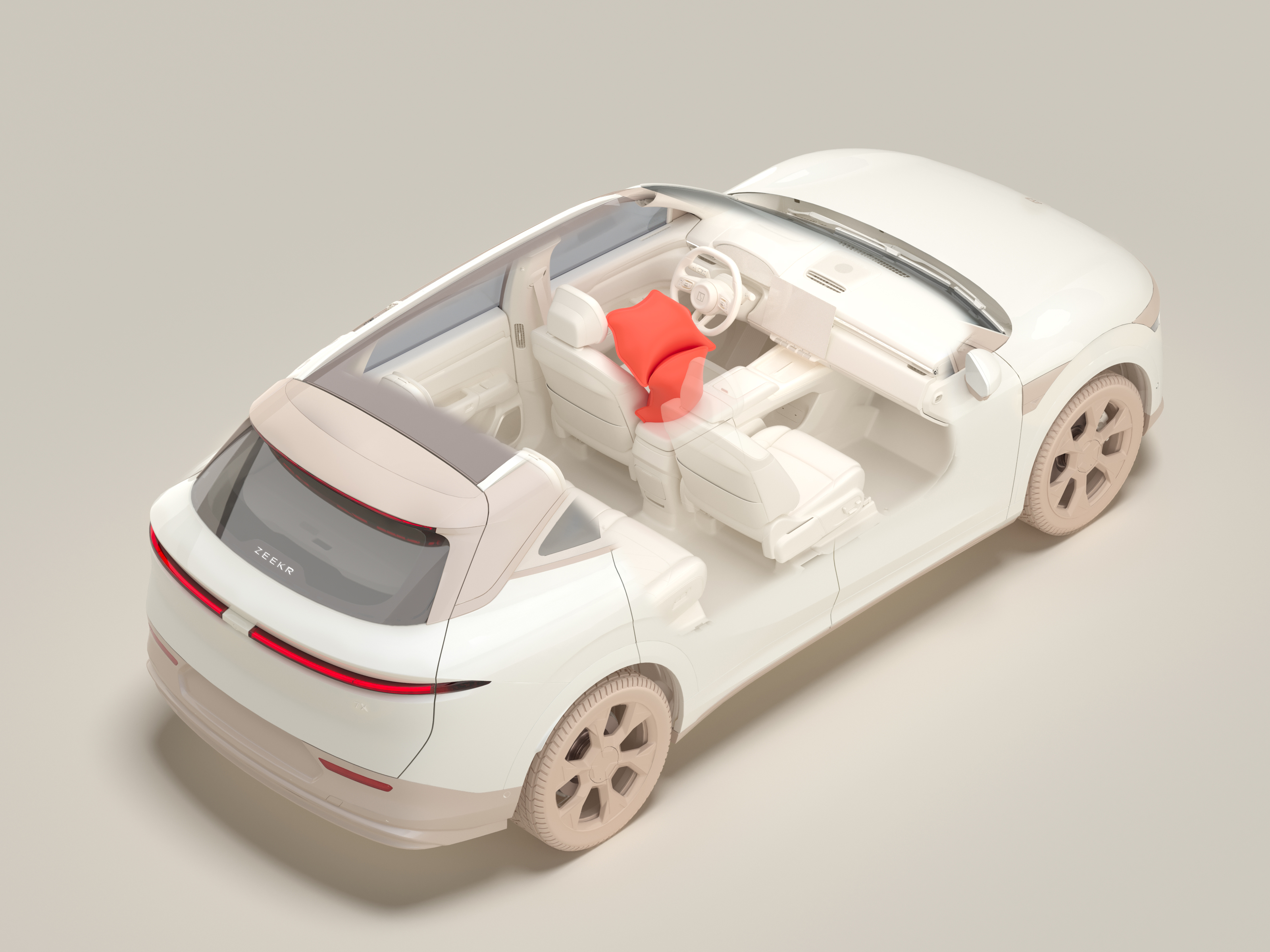
Inflatable curtains
- Do not place or hang items on the roof lining, door pillars, or side panels. Doing so could result in serious injury to the car's occupants after airbag deployment.
- Do not attach or hang heavy items onto the roof handles. The hooks are designed to accommodate light coats or similar clothing. Doing so could result in serious injury to the car's occupants after airbag deployment.
- Always leave 10 cm between the luggage or other loads and each of the windows. Objects placed closer to the windows could interfere with the function of the inflatable curtain, which could result in death or serious injury.
Inflatable curtains are designed to prevent the car's occupants sitting in the outboard seats from striking their head on the inside of the car during a collision.